










Wildlife Response
Phillip Island Nature Parks works closely with Wildlife Victoria on wildlife rescue and rehabilitation operations across the island. Sick and injured wildlife are treated and cared for either by trained wildlife carers, local vets or Nature Parks staff at the Wildlife Rehabilitation Centre.
Wildlife Victoria is the lead agency for rescue and response. For any sick or injured wildlife, please call 03 8400 7300 – lines are open 24/7.
Important visitor information: Find out more about Avian Influenza and current safety advice here.
To report sick or injured Phillip Island wildlife:
PHONE
Wildlife Victoria on 03 8400 7300. Wildlife Victoria lines are open 24/7, 365 days.
Wildlife Victoria is a non-profit charity that has operated the state's wildlife emergency response service since 1989.
Wildlife Victoria is the lead agency for wildlife emergency response on Phillip Island and the Nature Parks is proud to support this service.
Emergency Response Operators are coordinated by Wildlife Victoria and provide real-time advice and, in most instances, arrange for a trained volunteer to attend to the animal. Wildlife Victoria works hard to ensure the best possible outcome for every native animal.
ONLINE
The Department of Energy, Environment and Climate Action have an Online Tool for Help for Injured Wildlife.
Help for Injured Wildlife is a web-based tool created to provide the general public with relevant contact details and information to help when they encounter sick, injured or orphaned wildlife in Victoria.
For Frequently Asked Questions go to Help for Injured Wildlife FAQs here
Injured wildlife cases can also be logged online here
IN PERSON
Sick or injured wildlife can be taken to the Koala Conservation Reserve between 10am–4pm daily or to the Penguin Parade Visitor Centre from 4pm until closing time (approx. 2 hours after sunset) or to a local vet before 5.30pm
GENERAL INFORMATION
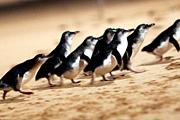
- Phillip Island Nature Parks runs a Wildlife Rehabilitation Centre, specialising in seabirds such as penguins which we take in from across Victoria.
- If a penguin is outside their burrow during the day, please report it but don’t touch or move the bird. A trained rescuer will come out to assess if the bird needs help.
- The Wildlife Rehabilitation Centre can only accept wildlife that lives on Phillip Island such as penguins, echidnas, possums etc.
- The Wildlife Rehabilitation Centre is unable to accept or attend to snakes or flying foxes/fruit bats, or wildlife that is not found on Phillip Island such as wombats and kangaroos.
- Permit restrictions do not allow the Wildlife Rehabilitation Centre to accept seals
- Trained staff are available to assist with wildlife rehabilitation in partnership with Wildlife Victoria.
Please click here for updates on wildlife currently being monitored by Phillip Island Nature Parks rangers and information on our wildlife protection programs.
SEALS
What’s happening when seals are on the beach?
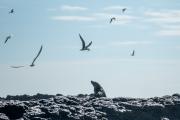
Seal Rocks is home to a large population of an estimated 20,000 seals. Seals often "haul out" to lie on beaches or other areas to rest or moult, moving between land and sea of their own accord. This is normal behaviour and happens more often over the summer months as the seal pups have been weaned and are fending for themselves. Sometimes they can also look injured, but they are actually ok. An example is seals secrete a watery substance from their eyes which is often mistaken for crying or an injury, but it is a natural mechanism to protect their eyes. Seals are also regularly bitten or scratched by other seals, but these wounds heal quickly and don't require human intervention.
To learn more about normal seal behaviour go to Encountering Seals.
What to do if you see a seal on the beach
- Leave it alone and maintain a safe distance from the seal, at least 30m to allow the seal to rest.
- Keep dogs restrained and at least 50m away from the seal to avoid frightening or injuring the seal. Seals and dogs can also share diseases, so best to keep your dog away.
- Do not feed the seal as it may become habituated to humans and unable to fend for itself in the wild.
- Do not attempt to move the seal back into the water or throw water over it – they can self-regulate their body temperature.
- Seal sightings can be reported on our website here
What if I believe the seal needs human help?
If you believe the seal needs human help, contact Wildlife Victoria on 03 8400 7300 or the Marine Response Unit on 1300 245 678 or call Department of Energy, Environment and Climate Action on 136 186.
The new Wildlife Rehabilitation Centre, opened in 2011, is funded through the ecotourism activities offered by Phillip Island Nature Parks and the Penguin Foundation adopt a penguin program.
The Centre is purpose built to care for Phillip Island’s sick and injured native wildlife. Starvation, road trauma, pet or feral animal attacks, oil spills and boat trauma are common causes of admittance to the Centre. The Wildlife Rehabilitation Centre provides access to offsite veterinary care and treatment when required. The ultimate aim of wildlife rehabilitation is to return healthy animals to the wild so they can resume life without further support.
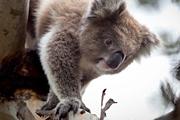
Each year the Wildlife Rehabilitation Centre treats approximately 150 little penguins and 300 to 400 other native animals, including short-tailed shearwaters, southern giant petrels and koalas.
Oil spills
A patch of oil the size of a thumbnail can kill a little penguin.
The Wildlife Rehabilitation Centre can care for up to 500 little penguins in the event of an oil spill.
To date, the largest number of oiled birds treated at Phillip Island Nature Parks was over 438 in a 2001 oil spill. Over 95 per cent of these penguins were released back into the wild thanks to the experience of staff and volunteers. Phillip Island Nature Parks also runs training courses and provides advice to other wildlife shelters across Australia relating to little penguin and seabird rehabilitation.
Volunteer wildlife rescue network
Wildlife Victoria coordinates a volunteer rescue/transport network for Phillip Island. The network assists with the collection and transport of sick and injured native wildlife to the local vet or the Wildlife Rehabilitation Centre.
If you live on Phillip Island and would like to be a rescue/transport volunteer please contact Wildlife Victoria registration.
Donations to support the ongoing treatment of sick and injured wildlife, and to assist in their transport and care, can be made through the Penguin Foundation adopt a penguin program.