







Who we are
Phillip Island Nature Parks is a unique conservation organisation that was established in 1996 under the Crown Land (Reserves) Act 1978 'for the conservation of areas of natural interest or beauty or of scientific, historic or archaeological interest'.
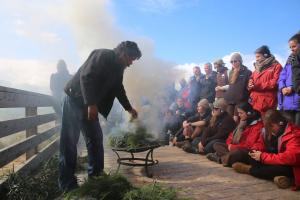
We acknowledge that the Crown Land we are privileged to manage forms part of the traditional lands of the Bunurong People who call Phillip Island, Milawul, and that the Land, Waters, Sea and Sky are of spiritual, cultural and economic importance to Aboriginal and Torres Strait Islander Peoples. We pay our respects to Elders past and present and acknowledge their continuous connection to land, water, sea and sky on Milawul.
As a self-funded organisation, your visit directly contributes to the conservation of wildlife and habitat protection.
 |
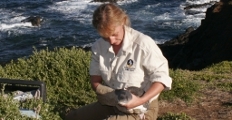
Since its first introduction in 2022 by the Nature Parks, the Animal Welfare Policy adopted a holistic approach to achieve the highest standards of animal welfare in our conservation, tourism, education, and research activities. The organisation is committed to maintaining an evidence-led approach to conservation and animal welfare, which has delivered outstanding outcomes on Phillip Island (Milawul) and beyond. This unique evidence-led and tourism-funded approach to conservation has helped to make the Nature Parks a global leader in tourism-integrated conservation.
Conservation achievements
- Declaring Phillip Island (Milawul) fox-free in 2017.
- The Eastern barred bandicoot continues to thrive with ongoing growth in numbers on the island, since the initial release of the species on Phillip Island (Milawul) in 2017.
- Management of the hooded plover program on Phillip Island (Milawul) with our volunteers which has contributed to the breeding success of this threatened species.
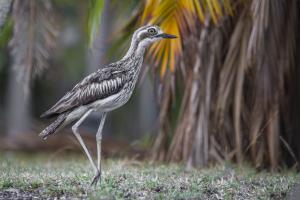
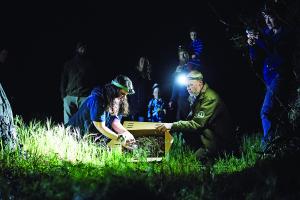
- The reintroduction of the bush stone-curlew to Phillip Island (Milawul) in August 2024 as part of a recovery plan for the species in south-eastern Australia.
- Planting over 250,000 indigenous plants since 1996.
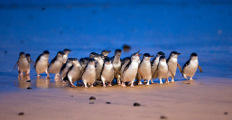
- Efforts to future-proof little penguin habitat continue to progress with three ‘green’ firebreaks established across the middle of the Summerland Peninsula.
- Veterinary scientists from the University of Melbourne releases a Disease Risk Assessment for Little Penguins, setting future directions for managing disease risks in our little penguin population.
 |
 |
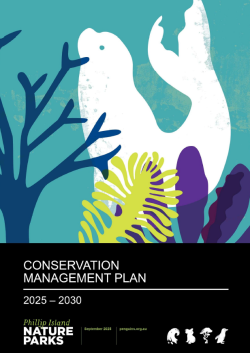
Conservation Management Plan 2025-2030
This plan lays the foundation for Conservation for the future (beyond the life of this plan) and embeds the concept of evidence-led conservation in our programs by strengthening data, frameworks, and processes to guide our decision making.
It signals the beginning of a more targeted and future-focused phase of land management and acknowledges both the opportunities and the challenges we face including defining ecological reference conditions, implementing programs to restore a balanced ecosystem and projecting future trajectories in a changing climate.
Priorities within this plan include initiatives that will strive towards the long-term security of little penguins, koalas and threatened species and improving the overall health of ecosystems on Milawul by working alongside Bunurong Land Council to integrate cultural knowledge into our work.
Download the full plan.
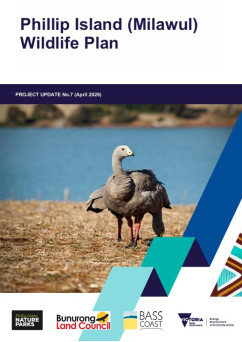
Phillip Island (Milawul) Wildlife Plan
The Phillip Island (Milawul) Wildlife Plan was released in 2021 and aims to achieve a balance between the needs of wildlife and community.
Phillip Island’s wildlife is an important part of the community’s identity and economy. Wildlife experiences on the Island generate jobs and revenue and are a major attraction for the millions of visitors that come to Phillip Island (Milawul) each year.
Download the full plan
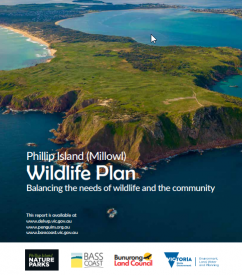
Phillip Island Wildlife Plan – Year 4 Report
Download the report.