














Conservation News - December
Positive action for a biodiverse future
Wumindjika (Welcome)
A message from Stuart Murphy, Acting General Manager Conservation
With the recent departure of Jess McKelson to South Australia, I have enjoyed leading our Conservation team to continue their incredible work at Phillip Island Nature Parks.
Our Research team have been continuing to monitor our wildlife to better understand and protect little penguins, seals and threatened species along with contributing to research on the impacts of light pollution on seabirds over the last 12 years - we are excited to be part of the first ever ‘Smart Streetlight’ trial on Milawul.
Our Reserves team have been busy undertaking conservation work to monitor remnant vegetation and protect assets in our coastal and woodland ecosystems in preparation for summer.
Spring has kept the team at the Wildlife Rehabilitation Centre busy and as they prepare for the warmer months, we are reminded to help wildlife by providing water in shady areas and reporting injured wildlife.
A special thanks to our volunteers who are integral to the work we do. The Barb Martin Bushbank nursery volunteers continue supporting the growth in plant production for conservation works across the island. Congratulations to Rob Humphrys, recently selected as a finalist in the Volunteering VIC awards for his ‘continuous commitment’ to the nursery over 20 years!
Marine Species
Wildlife Management
Wildlife Rehabilitation Centre
Published Conservation News
Marine species
Little penguins
2025–26 penguin breeding season update
Kat McNamara, Research Officer
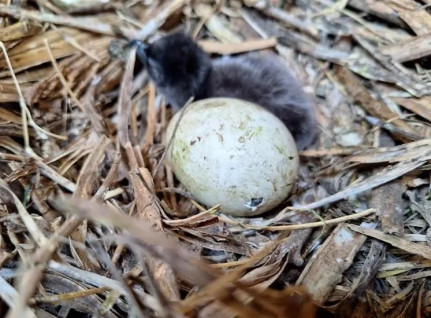
Image 1: Little penguin chick and pipping egg (photo by Vivien Morris).
The start of the 2025–26 little penguin breeding season has begun more slowly than the 2024–25 season, with breeding commencing approximately two months earlier than the long-term average following an unusually strong autumn breeding event. Although some penguins attempted an autumn clutch this year, most attempts did not produce fledglings.
Overall, 38% of monitored burrows across the Penguin Parade area are currently showing breeding activity, with little penguins incubating eggs, and in both guard and post-guard stages of chick rearing. The average number of little penguins crossing the beach each evening at the Penguin Parade fluctuated from a low of 592 in July, to a high of 1,121 in October.
In November, we were surprised with an albino little penguin chick being hatched at one of our study sites. This is the first confirmed case of albinism in little penguins recorded on the island, although instances of leucistic little penguins have been documented previously. The chick is entirely white and exhibits the characteristic features of true albinism, including pale, pink-toned skin, beak and eyes. While remarkable, this condition presents challenges as the absence of protective pigmentation can increase susceptibility to UV exposure and predation, and individuals with albinism often experience reduced visual acuity. As we continue to monitor this study site into December the chick has not been seen again and is presumed to have died.
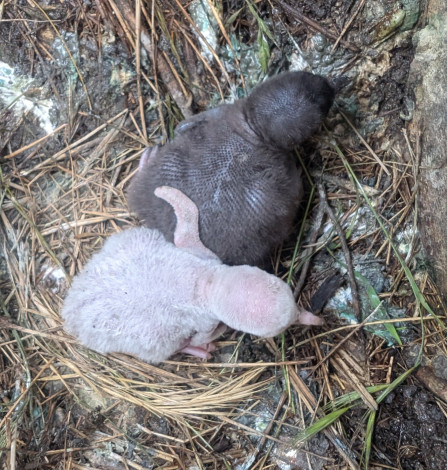
Image 2: Albino little penguin chick.
Little penguin weights recorded on the weighbridge have remained above the long-term average for most of the year but dipped below average during the post-moult period, when little penguins return to sea after spending several weeks on land without feeding. This temporary decline reflects the natural loss of body condition associated with moulting, after which birds begin to regain weight when they resume foraging at sea.
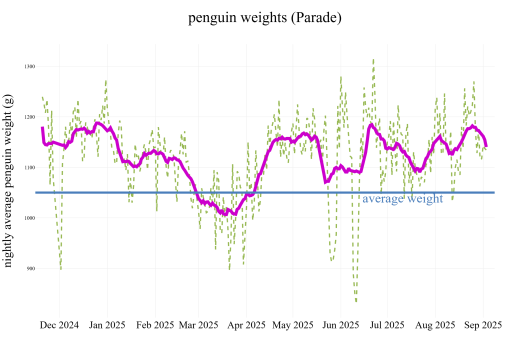
Figure 1: The average weight of little penguins crossing the Penguin Parade Automated Penguin Monitoring System from December 2024 to September 2025. The solid blue line is the long-term weight average (1050 g), the dashed line is the nightly mean weight, and the pink line is the 14-day rolling weight average.
This year, it is penguin census time again. The census is conducted every three years and provides essential data to support long-term monitoring and research. The census is taken over a six-week period during the breeding season, mapping the extent and density of the little penguin colony to get an estimate of the number of breeding little penguins on the Summerland Peninsula. Reserves Ranger Jesse Cimorelli has taken on the role of Penguin Census Officer to complete this project alongside intern Tessel Borst who has joined us all the way from the Netherlands.
Light trial at Phillip Island (Milawul)
Andre Chiaradia, Senior Scientist
Phillip Island Nature Parks, alongside AusNet Services, Bass Coast Shire Council and Signify have launched an exciting smart-streetlight trial on Phillip Island (Milawul) aimed at cutting energy use and safeguarding native wildlife. The extensive research by the Nature Parks on light pollution, led by postdoctoral fellow Airam Rodriguez, together with the tireless rescue work of our rangers, has revealed how artificial light disrupts animal behaviour and has been instrumental in raising public awareness of these hidden impacts.
Building on that work, the partnership is installing warm LED streetlights with smart controllers and proximity sensors at key locations, including the Phillip Island bridge, the Esplanade at Sunderland Bay, Back Beach Road and Cape Woolamai (see figure 2). These lights will dim automatically when full brightness is not required and can be switched off during sensitive wildlife periods such as the annual shearwater migration, dramatically reducing light pollution and energy waste. The trial will also monitor community feedback and wildlife responses, with the hope that successful outcomes will pave the way for a broader roll out across the network.
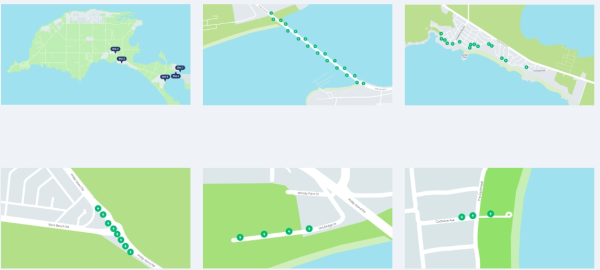
Figure 2: Map of streets and the bridge where the smart light trial is being installed.
Research Newsletter
Andre Chiaradia, Senior Scientist
The annual Nature Parks research newsletter is out now! It highlights how our science is driving advances in wildlife conservation from local initiatives to global collaborations. It features the published papers in 2024 and 2025. Studies on Australian fur seals and little penguins shed light on unseen challenges, from disease transmission in seals to the surprising influence of ‘divorce rates’ on little penguin breeding success. New findings reveal that cat-borne toxoplasmosis continues to threaten endangered Eastern barred bandicoots, while innovative tools such as multi-species pathogen detection and camera-trap data integration are revolutionising how we monitor wildlife health and behaviour. These discoveries, combined with global tracking of marine megafauna, are redefining how scientists understand animal resilience in a changing environment, from Phillip Island to national and international partnerships. Read all stories here.
The sailing drone
Andre Chiaradia, Senior Scientist
The sailing drone is now completing its third season of little penguin breeding season fish surveys, generating nearly three TB of acoustic data along 350 km of transects. This dataset is being processed by PhD student Lilia Guillet into high-resolution maps showing fish school density, depth, and distribution. Early results reveal strong seasonal shifts, with dense nearshore schools early in the season giving way to dispersed, deeper schools mid-season, patterns that match declines in little penguin foraging success recorded on weighbridges. The recent two-month autumn deployment confirmed high productivity outside the breeding period, providing vital context for prey availability leading into reproduction. The international research team has developed new automated fish detection tools, positioning the project to analyse multi-season trends and test how fish movement, depth, and patchiness drive little penguin chick feeding and colony productivity.
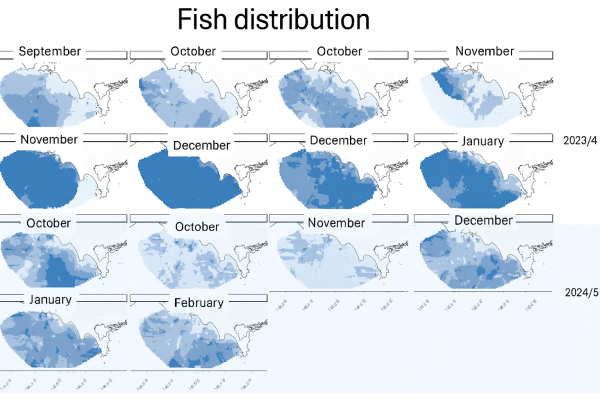
Figure 3: Maps of fish distribution inside the foraging zone of little penguins from acoustic data. The density of fish schools goes from low (light blue, 1) to high (dark blue, 4)
Australian fur seals
Rebecca McIntosh, Senior Scientist
The breeding season has begun at Seal Rocks, and the Research team are flying drone surveys to monitor pup birth, adults, juveniles and those entangled in marine debris, every ten days until January. As the new pups are born, the weaned juveniles from last season need to gain independence from their mothers. This is not always successful, and we can expect to see deceased seals around our beaches this December. Surveillance is being performed for avian influenza with all samples negative to date.
This year we conducted five research trips to Seal Rocks, where we observed 11 entangled seals. Thanks to dedicated efforts, four seals were successfully released from their entanglement providing vital intervention that prevents a painful death and gives these animals a second chance at life. The remaining six seals, all sub-adult males weighing over 100 kg, proved too challenging to catch as they spent most of their time in the water. Every successful release is a cause for celebration and a reminder of the importance of ongoing monitoring and response to entanglement impacts.
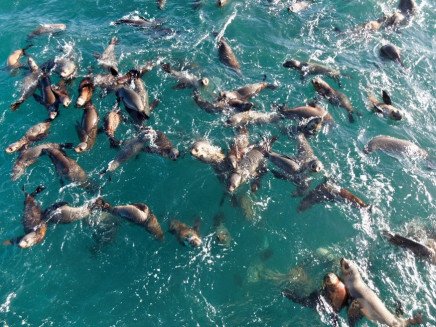
Image 3: Australian fur seals at Seal Rocks
Dr Jessalyn Taylor has been awarded her doctorate, a huge achievement and we wish her success in the future, you can read her latest research paper via the link under ‘Publications’. PhD candidate Adam Yaney Keller is currently exploring the differences in behaviour between disentangled seals and healthy unaffected seals of similar size and sex. This will be the final chapter of his PhD. We are grateful for the efforts and achievements of our students and volunteers across the Nature Parks projects.
Wildlife Management
Future-Proofing Little Penguins Project
Simon Heislers, Summerlands Peninsula Project Coordinator
The three-year 'Future-Proofing Little Penguins' Project is drawing to a close, and this spring saw the completion of the third planting season on Summerland Peninsula. In total, over the three years, 34,000 plants have been planted including 27,500 plants on the firebreaks established during the first year of the project, and 6,500 plants in target areas of little penguin habitat. This was achieved through the combined effort of Nature Parks staff and volunteers, Bunurong Land Council Aboriginal Corporation Natural Resource Management staff, Penguin Foundation staff and volunteer groups, and planting contractors.
The goals of the project:
- Establish a series of ‘green’ firebreaks that have significant cover of fire retardant Indigenous herbaceous plant species, and
- Create cooler little penguin habitat within degraded and exposed areas of the little penguin colony by increasing tree cover and improving cover and diversity of understory/groundcover.
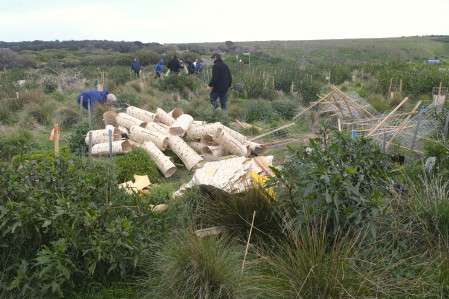
Image 4: Scotch College students and Bunurong Land Council Aboriginal Corporation staff planting trees under kangaroo apple in degraded little penguin habitat opposite Shelley Beach carpark (September 2025).
The soil on the peninsula is volcanic clay with sandy influence in some parts close to the coast. These clay soils typically dry out and crack in summer but are prone to waterlogging in winter and spring, and subject to periodic localised flooding in low lying areas. All species planted are variously adapted to growing in these soils, but none cope well with extremes of wetting and drying experienced during different seasons. Exposure to strong salt-laden coastal winds adds further influence, depressing growth, and particularly to trees growing close to the coast and in isolation from other vegetation or forms of shelter.
Monitoring project actions including assessing survival and growth of plantings is an important focus for the project. The data collected helps to identify successes and failures and provides information to help inform, refine and improve outcomes of future conservation actions. Recently, environmental science students from Deakin University helped complete a two-year assessment of survival and growth of revegetation plantings on the firebreaks that included assessment of the plants planted during the first year of the project (2023).
The key metric and measure of success set for the project for revegetation was a survival rate of 60% two years after planting. The actual survival rate averaged 22% across the three firebreaks and varied from 12%–35% for each of the individual firebreaks. Survival varied further within each of the firebreaks with soil, drainage and rainfall, coastal winds and herbivory combined to have strong and variable influence on survival and growth.
Although the original goals and expectations for this project may not have been fully achieved, it has provided a much deeper understanding of the current ecological conditions and what is achievable moving forward. While this project is concluding, the knowledge gained is already informing future conservation planning for the Summerland Peninsula.
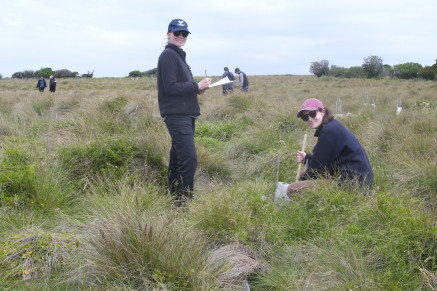
Image 5: Deakin University students undertaking two year survival and growth assessment of revegetation plantings on the green firebreaks (November 2025).
Koalas
Lachlan Sipthorp, Acting Wildlife Manager
In October, our team conducted comprehensive health assessments for the captive koala population at the Koala Conservation Reserve. Each koala underwent a physical examination, including checks on muscle tone, teeth wear, eyes, and identification tags. Blood samples were collected, Bravecto was applied to prevent ticks, and chlamydia PCR tests were performed. We are pleased to report that all koalas received a clean bill of health.
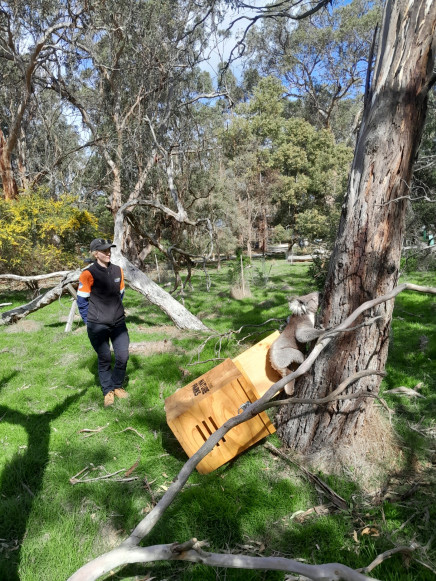
Image 6: The Koala Conservation Reserve welcomed Obi-Wan a three-year-old male koala on loan from Ballarat Wildlife Park.
We currently have three koalas from the South Gippsland region in our off-display critical care facility. These koalas are receiving fitness and conditioning, supplemental feeding, and close monitoring. Once they are ready, they will be returned to their original habitat.
Over the past year, artificial tree hollows have been installed throughout the Reserve to support native bird species and microbats. This spring, we have seen exciting results, with hollows now occupied by kookaburras and eastern rosellas.
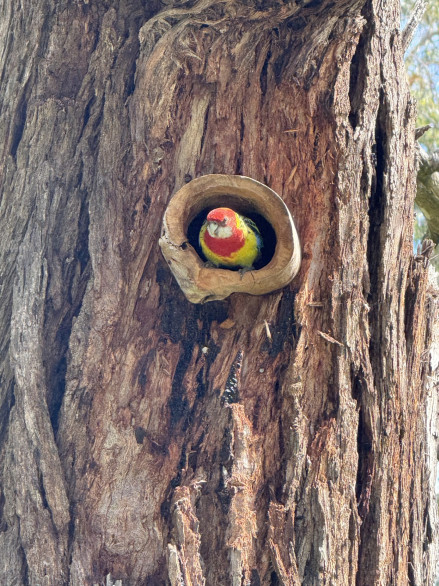
Image 7: Eastern rosella using an artificial tree hollow.
Flora
Reserves Management Program
Mark Merryful, Reserves Senior Ranger
With the holiday season fast approaching the Reserves team are busy cutting back, brush cutting and generally tidying up all of our beach access points, lookouts and the extensive system of tracks and trails across the reserves system.
The team is also actively maintaining our asset protection zones. These are where park boundaries are shared with private land, buildings, structures or significant natural assets and works include clearing and maintenance for fire safety.
This wet, windy and so far, very mild spring has presented us with very favourable conditions for vegetation growth particularly annual grasses and thistles!
An extensive park wide thistle control program has just been completed while our attention is also focused on some other lesser known but high threat weeds including Chilean needle grass.
Infestations through the woodland reserves on the Summerland Peninsula have been chipped out by hand and followed up with weed control spray works.
Deakin University volunteers assisted with the Chilean needle grass control and the removal of woody weeds such as polygala and boxthorn on Summerland Peninsula and Observation Point.
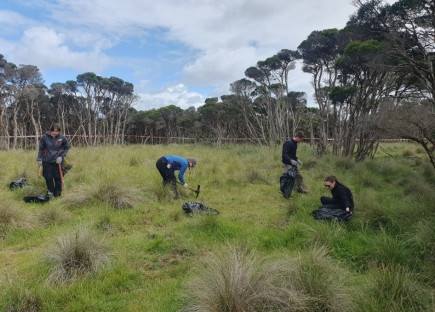
Image 8: Deakin University students chipping out Chilean needle grass.
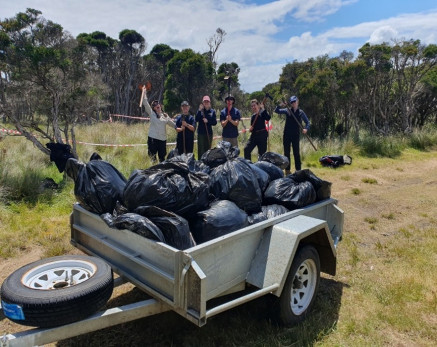
Image 9: Deakin University students filling the trailer of Chilean needle grass.
Barb Martin BushBank
James Anderson, Environmental Restoration Supervisor
Spring has been incredibly busy at the Barb Martin BushBank. Our new nursery assistant Renee Ridgway has settled in amazingly, taking the lead on volunteer supervision which has allowed a greater focus on our retail and wholesale supply and customer base. This has led to record retail sales in October and November, and October being our best month of sales ever!
We have continued to upgrade our infrastructure with new possum-proof netting as well as irrigation repairs and additions.
We have had some turnover of volunteers with successful recruitment to keep both Wednesday and Thursday sessions full. We want to acknowledge one volunteer in particular, Rob Humphrys, who was a finalist in the Volunteer Commitment category of the Victorian Volunteering Awards. Congratulations Rob! His continuous commitment to the BushBank over a 20-year period is amazing.
Production is steady and until the 2026 ‘grow to order’ numbers are finalized, it is again looking like a very big season. With supply and consultation provided to the Inverloch Erosion Mitigation Project and upcoming Bass Coast shire wide bio-links works, our usual supply to stakeholders will increase.
Seed collection season is now upon us and due to demand we are making a huge effort to meet requirements, which is roughly a four-month process involving volunteers, nursery staff and rangers. In preparation, our existing stored seed has been audited and older seed has been direct sown into the habitat. This frees up storage capacity for fresh seed.
As a result of extensive reintroduction of threatened species over the last few years, production has slowed and focus moves to quantifying limits of population density . We can now target new threatened flora species and spend more time on key species such as crimson berry following our most successful propagation attempts yet.
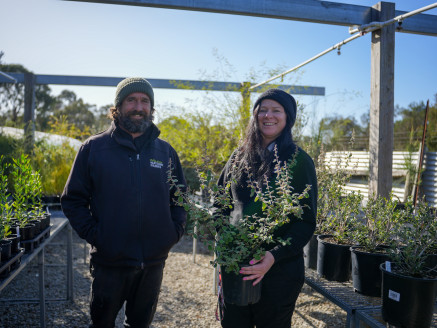
Image 10: James and Renee at the Barb Martin Bushbank
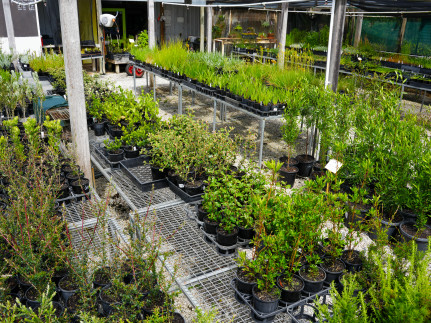
Image 11: Summer stock at the Barb Martin Bushbank
Wildlife Rehabilitation Centre
Brittany Pullin, Senior Wildlife Welfare Officer
After a quiet winter spent reorganising and enhancing the Wildlife Rehabilitation Centre, spring brought an influx of babies into care. From Australian shelducklings and wood ducklings to magpies, lapwings, silver gulls, Eastern barred bandicoots, and a handful of young echidnas. This full house of little ones has kept the team busy. While some young were able to be reunited with their families or fostered to new ones, others required hand-rearing, which can be demanding on both time and resources. This workload has been demanding, as seen in the image below.
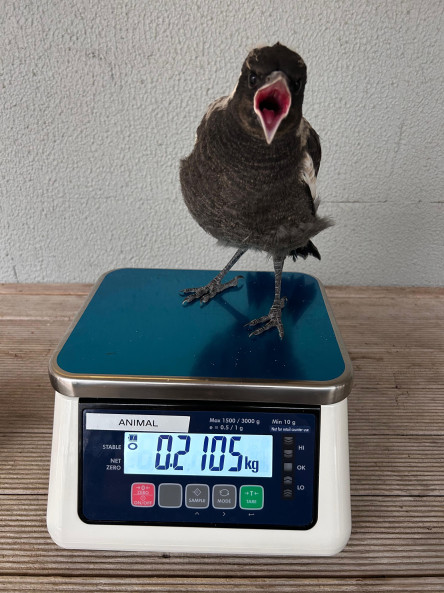
Image 12: Fledging magpie chick impatiently waits for breakfast while getting their weekly weight taken.
The young short-beaked echidnas that came into care were an interesting case and a unique opportunity for the team to stretch our proverbial medical and rehabilitative wings and strengthen the working relationships with other wildlife experts.
Each echidna presented with a skin condition (red, angry looking skin) with various degrees of scabbing and missing hair and spines predominantly along their backs. In the initial weeks of their care, these echidnas received daily baths with medicated shampoo and twice daily treatment with an antifungal spray.
Given the unusual presentation in the number of cases seen, we sought out further answers and took our echidnas on a fieldtrip to Healesville for further diagnostics. Each echidna received a full work-up, with subcutaneous fluids, pain relief, and anti-parasitic treatment while under anaesthesia along with blood and biopsy samples taken. They have also uploaded information on our echidnas to the state-wide database so that we can further work together to determine what is affecting our native wildlife and how to best help. While we are still waiting for test results, I am happy to report that our current treatment is effective, with each echidna’s skin showing great improvements and hair beginning to regrow.

Image 13: Echidna Five receiving a medicated shampoo bath.
Earlier this year, we were able to come to the aid of an Eastern barred bandicoot joey. At only 132 grams, she was found in the mouth of a Phillip Island resident’s dog and taken straight to the vet in Newhaven. Thankfully uninjured, she came to us where she was gradually weaned from milk and raised to be independent and self-sufficient. She was successfully released after 41 days in care.
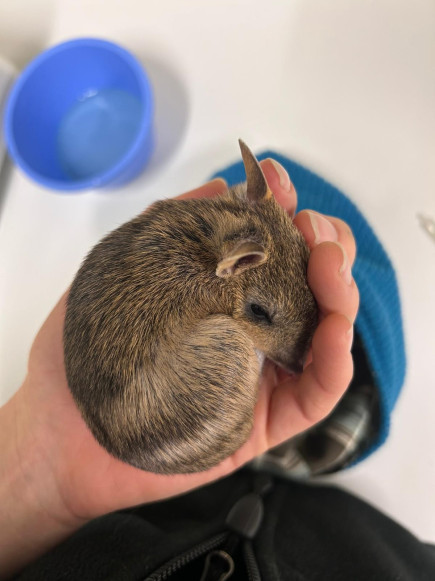
Image 14: Eastern barred bandicoot joey curled up in Ranger Rosie’s hand at intake.
As the summer heat approaches, we can all help our local wildlife by leaving bowls of water on the ground so birds and mammals can stay hydrated. During heat waves, be mindful of signs and symptoms of heat stress for our particularly vulnerable species, such as little penguins and grey-headed flying foxes.
If you are concerned about an animal being unwell or exhibiting abnormal behaviour, please call Wildlife Victoria’s Emergency Response Service on 03 8400 7300, available 24/7.
Publications
Gimeno, M., F. Ramírez, M. Coll, A. Chiaradia & C. Artana (2025). "Cumulative Extreme Events Threaten Penguin Habitats Across the Southern Hemisphere." Global Change Biology 31(10): e70562.Open access https://doi.org/10.1111/gcb.70562
Huang, L., R. H. Clarke, D. Teixeira, A. Chiaradia & B. Meyer (2025). "Acoustic recognition of individuals in closed and open bird populations." Ecological Informatics 90: 103330. Open access https://doi.org/10.1016/j.ecoinf.2025.103330
Sequeira at al. (2025). "Global tracking of marine megafauna space use reveals how to achieve conservation targets." Science 388(6751): 1086-1097. https://www.science.org/doi/abs/10.1126/science.adl0239
Stokes, K. L., N. Esteban, P. Casale, A. Chiaradia, Y. Kaska, A. Kato, P. Luschi, Y. Ropert-Coudert, H. J. Stokes & G. C. Hays (2025). "Optimization of swim depth across diverse taxa during horizontal travel." Proceedings of the National Academy of Sciences 121(52): e2413768121. https://doi.org/10.1073/pnas.2413768121
Taylor, J., J., McIntosh, R., R., Charrier, I., Gray, R., B., 2025. Evaluation of parameters of health in Australian fur seal (Arctocephalus pusillus doriferus) pups during early and mid-lactation. Australian Journal of Zoology 73, ZO24041. (open access link to paper: Evaluation of parameters of health in Australian fur seal (Arctocephalus pusillus doriferus) pups during early and mid-lactation | Australian Journal of Zoology | ConnectSci
VanCompernolle at al. (2025). "Vulnerability of marine megafauna to global at-sea anthropogenic threats." Conservation Biology: e70147. Open access https://doi.org/10.1111/cobi.70147
Wintz, J., N. Joly, S. Jenouvrier, V. A. Viblanc, A. Chiaradia and C. Saraux (2025). "Early-growth trajectories affect juvenile survival, age at first reproduction and lifetime fitness in a long-lived seabird, the little penguin." Journal of Animal Ecology 94(11): 2240-2254. Open access https://doi.org/10.1111/1365-2656.70124