











Know Your Nature Parks - Spring 2026
Spring has arrived on Phillip Island (Milawul), bringing a burst of wildflowers, the return of migratory birds and a flurry of breeding activity across land, sky and sea. It is one of the most vibrant times of year in nature, and behind the scenes, Phillip Island Nature Parks teams are busy monitoring, protecting and caring for the island’s remarkable reserves and wildlife.
In the skies – Birdlife
Hooded plovers
The 2026–27 hooded plover breeding season on Phillip Island (Milawul) has officially begun! Hooded plovers are forming partnerships and searching for nesting sites. Our team monitors beaches and dunes, particularly along high tide lines, to assist these threatened birds by setting up signs and roped-off areas for protection.
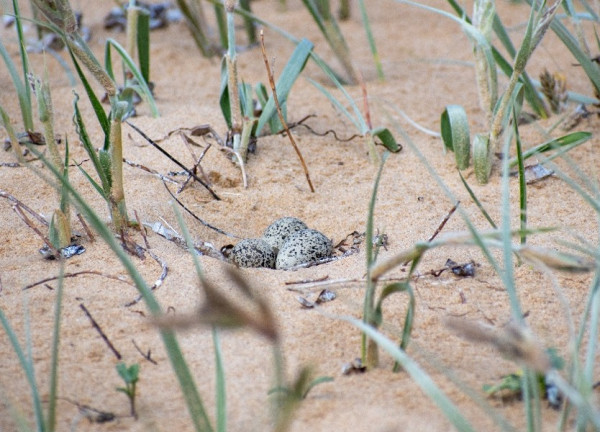
Image 1: Hooded plover nest with eggs
Short-tailed shearwaters
Short-tailed shearwaters return from their Aleutian Island feeding grounds and can be seen shearing above the waterline at sunset. While walking, be mindful to stick to tracks in the dunes to avoid disturbing their burrows.
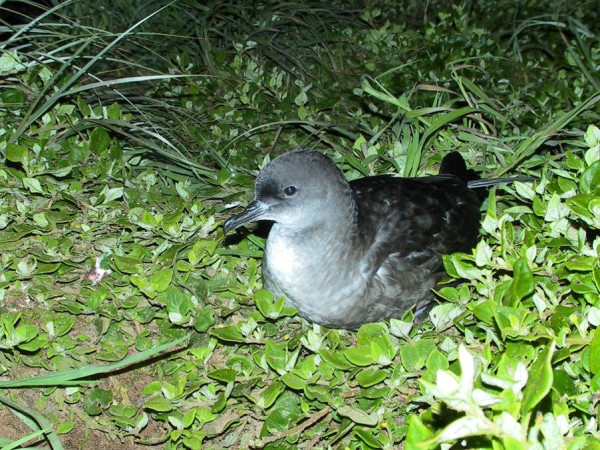
Image 2: Short-tailed shearwater sitting on vegetation in the colony
In the water
Little penguins
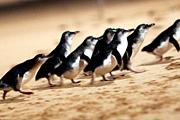
It has been a quiet winter here in the colony, with many of our penguins out at sea foraging. As we move into spring, there is some breeding activity already, with some pairs sitting on eggs while a few of the earliest birds already have chicks close to fledging. Our automated weighbridge is showing above-average penguin weights, and we expect numbers crossing the beach at the Penguin Parade to increase in the coming weeks as we come into the breeding season.
Breeding is triggered by a rise in ocean productivity, measured by chlorophyll-a levels, which typically follows the seasonal warming of sea surface temperatures. Each pair typically lays two eggs, and both parents share incubation duties in shifts, swapping over so each can head back out to sea to feed.
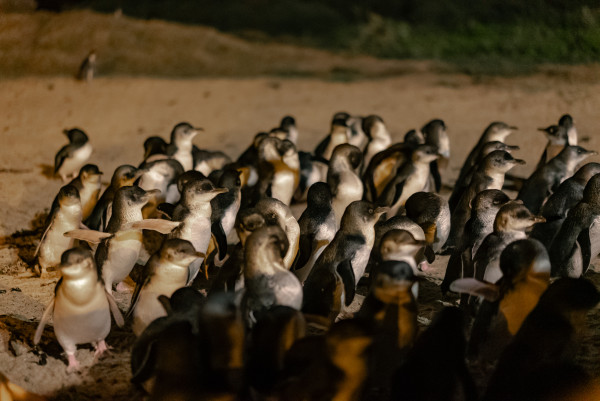
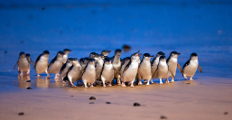
Image 3: Penguins resting and preening their feathers before they return to their burrows.
In the trees
Koalas
Over the last 12 months, the Koala Conservation Reserve has assisted in the rehabilitation and release of eleven wild koalas from various areas across South Gippsland. Koalas undergo fitness and conditioning in off-site pens before being cleared for release in natural habitat.
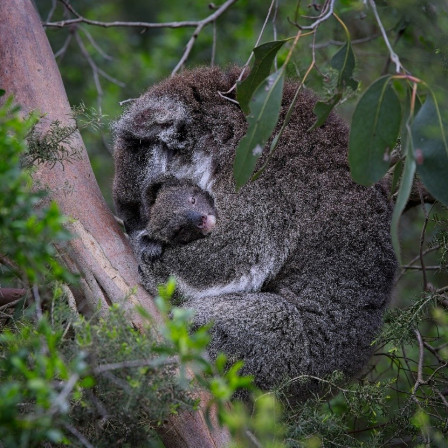
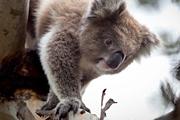
Image 4: Glimpse of a new joey at the Koala Conservation Reserve. Photo by Ian Prain.
There is exciting news from the Reserve’s captive koala population, with two new joeys welcomed this year. Still tucked safely in the pouch, the joeys will have their first inspection during the annual health checks in November, once they are a little more independent.
The Reserve is also growing its future koala food supply. A new plantation, completed in January, had its first plantings in September, with further planting to continue over the next four years. This brings the Reserve’s total to four plantations and introduces new browse species that have not previously been available onsite for cutting.
In June, staff and koala volunteers rolled up their sleeves in the north plantation, planting 250 manna gums and 250 swamp gums as part of an all-staff planting day.
On the reserves
Little Penguin Resilient Landscape Project – Summerland Peninsula
During July and August, a large team of staff from Phillip Island Nature Parks and Bunurong Land Council Aboriginal Corporation completed installation and planting of 32 habitat restoration plots in an area of highly degraded penguin habitat along the south coast road on Summerland Peninsula. The plots stand out as a patchwork in the landscape and contrast against the currently lush green exotic pasture grass that dominates the site.
Each plot stands alone as a habitat restoration ‘unit’ designed to improve habitat quality and diversity, but together form a habitat restoration research trial designed to compare the effectiveness of a range of land management treatments used to help to restore habitat.
The same number and mixture of indigenous plant species have been planted in each plot, but different combinations of management treatments have been applied to each plot, giving each a distinctly different appearance. These treatments include application of mulch to smother exotic grass, herbicide to kill exotic grass, addition of woody branches providing structure for plants and protection from browsing animals and fencing to exclude herbivores.
While the long-term goal is to restore this site to a natural state, providing high-quality habitat for penguins and other native wildlife it is understood that this will follow a stepwise process rather than a simple transition. This trial serves as the first step in this process and will provide important information in helping to identify more effective ways to restore other degraded areas of penguin habitat across Summerland Peninsula and Phillip Island (Milawul). The three-year Little Penguin Resilient Landscape Project is funded by the Penguin Foundation.
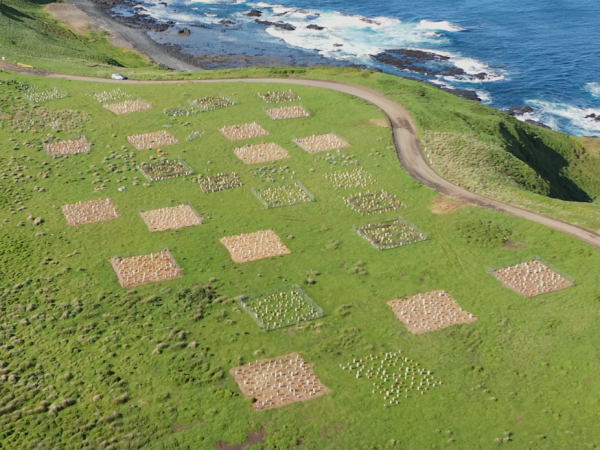
Image 5: Habitat restoration plots installed as part of the Little Penguin Resilient Landscape Project, Summerland Peninsula, July 2026.
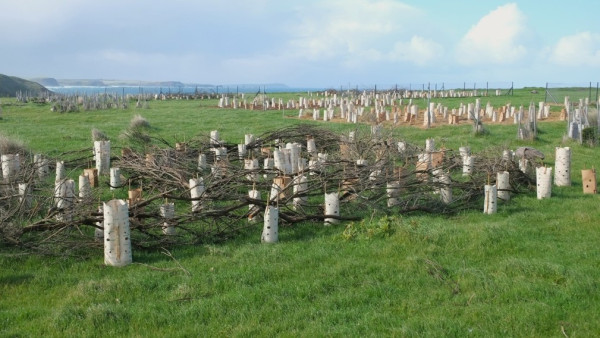
Image 6: Habitat restoration trial plots installed as part of the Little Penguin Resilient Landscape Project, Summerland Peninsula, July 2026.
Seabird Habitat Resilience Project
The Seabird Habitat Resilience team has been hard at work over winter, making strong progress to improve and protect important seabird habitat across Phillip Island (Milawul).
Revegetation works are now complete across several important seabird habitat sites, with a total of 13,000 plants established to strengthen coastal vegetation, improve habitat resilience and support native wildlife.
- 10,000 plants at the Beacon Site on Cape Woolamai.
- 1,000 plants along the kikuyu alignment on Cape Woolamai.
- 1,000 plants at the Ventnor short-tailed shearwater colony.
- 1,000 plants at Observation Point.
This work has been a true team effort, led by the Seabird Habitat Resilience team with valued assistance from Bunurong Land Council Aboriginal Corporation and the Nature Parks Rangers.
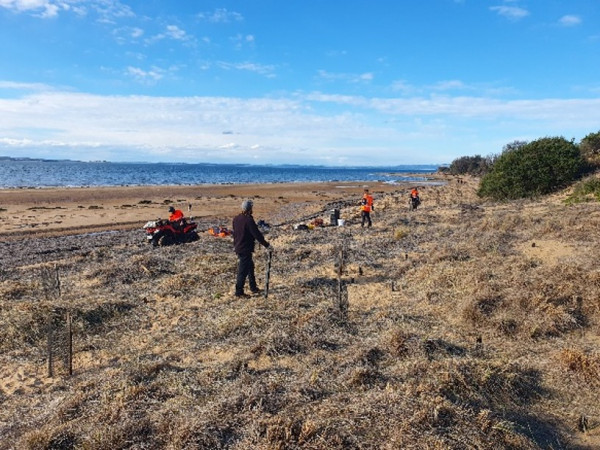
Image 7: Planting hairy spinifex at Observation Point
Weed control
Cape Woolamai
Over 100 hectares have been treated for invasive weeds, thereby improving habitat for seabirds and native plants and wildlife.
Major achievements include removing African boxthorn and other targeted weeds from huge areas including the Central Plateau Area within the walking trail, East Cape Track and the Quarry.
The Nature Parks rangers assisted by the Seabird Habitat Resilience team have undertaken an ambitious effort of removing boxthorn from Magiclands to the Pinnacles. With these combined and strategic efforts boxthorn has now been pushed to the remaining cliffside edges of Cape Woolamai Reserve.
Ventnor
Woody weeds including boxthorn, inkweed, bamboo and apple of sodom have been controlled across the short-tailed shearwater site. Horehound spraying has been undertaken and an arum lily control program will be implemented soon.
Observation Point
Approximately 2 hectares of marram grass has been controlled by contractors.
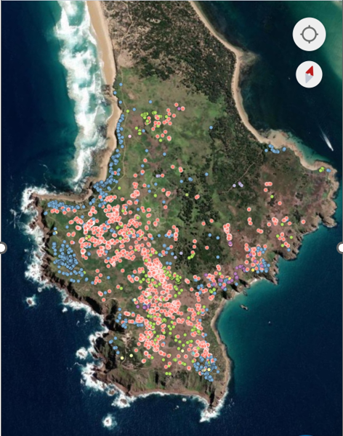
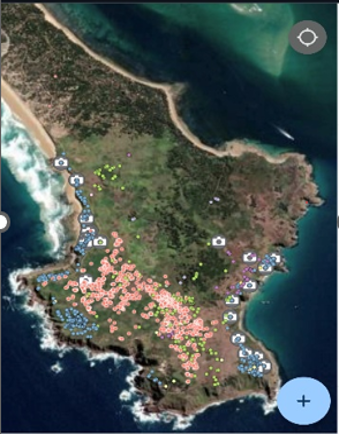
Image 8: Progression of targeted weed control at Cape Woolamai from (L – R) May to August 2026.
Reserves Management Program
Revegetation efforts have continued across several reserve sites, with 180 moonah trees planted at Churchill Island, additional succulent species established around the visitor centre building at the Penguin Parade, and more than 200 trees and shrubs planted at Conservation Hill and Oswin Roberts Reserve. Other reserve works have also progressed, including continued fenceline works at the Penguin Parade car park and woody weed control at Swan Lake.
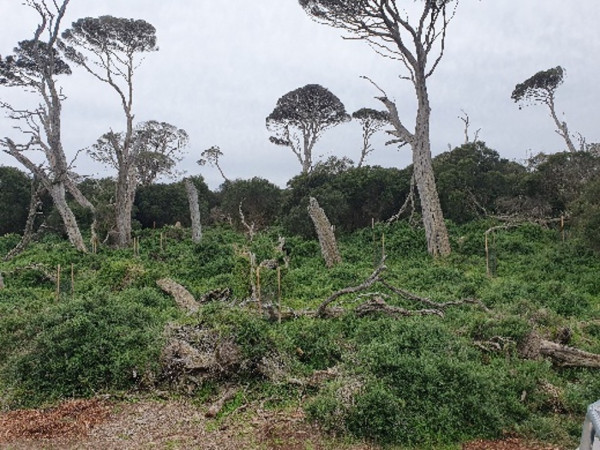
Image 9: New moonah trees planted amongst remnant Moonahs.
Penguin Foundation
We are incredibly proud to see world-leading conservation science being used to help protect little penguins and other wildlife on Phillip Island.
As concern about the spread of avian influenza grows, the need for specialist wildlife response capability has never been greater. The Penguin Foundation is raising $500,000 to strengthen the people, equipment and facilities that support wildlife response, care and conservation on Phillip Island. Please donate to our appeal: https://avian-influenza.penguinfoundation.org.au/
For the locals: Infrastructure projects
Beach Access Upgrades Smiths Beach (east)
Infrastructure upgrade works have been completed at the eastern access to Smiths Beach. The stairway and landings adjacent to the WBSLSC Rescue Base were redeveloped, and the accessibility ramp underwent maintenance and repairs including replacement of decking, handrails, and structural bearer supports. Works improve beach access safety for beach users and Woolamai Beach Surf Life Saving Club operations.
The works are funded via the Coastal Public Access and Risk Grant program 2024-25 and a contribution from the Nature Parks. The CPAR grants program delivers funding to coastal crown land managers, including voluntary committees of management and local government, to reduce coastal risk and improve public access.
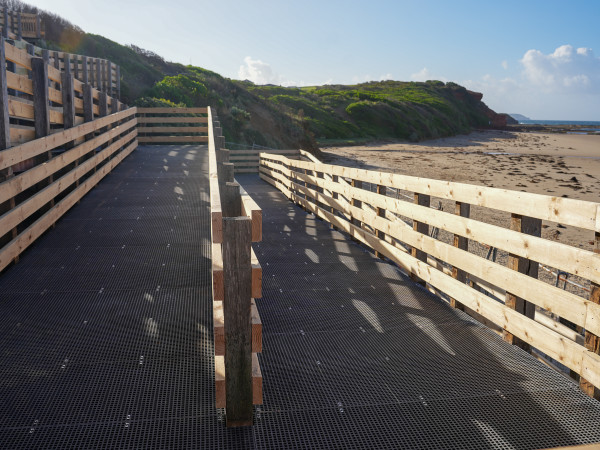
Image 10: Smiths Beach access upgrades.
Surfies Point Stairway Redevelopment
The Nature Parks will redevelop the beach access stairway at Surfies Point. Works follow temporary repairs conducted in 2025 on the existing structure, which is nearing end of serviceable life. Beach access closures at Surfies Point are required during works. Access to the beach will remain available via alternate access sites.
Works will begin in late 2026 and be staged into 2027 to ensure beach access remains open at Surfies Point over the summer holiday period.
For more information about the project, please visit www.penguins.org.au/about/our-community/projects-and-maintenance/ or email community@penguins.org.au
Support your Nature Parks
Keeping Wildlife Wild
The greatest thing you can do for wildlife is to keep it wild. Always maintain a safe distance and remember how fortunate we are to share our beautiful island home with them.
Take care when driving on Phillip Island, especially at dawn, dusk and at night when wildlife is most active. To report injured wildlife, call Wildlife Victoria on (03) 8400 7300.
For more information on living with wildlife, please visit https://www.wildlife.vic.gov.au/
We’d love to see your images from around the Nature Parks
Don't forget to share your autumn images of the Nature Parks with us.
Tag us:
Instagram - @PhillipIslandnp
Facebook - PhillipIslandNatureParks
#PhillipIslandNP