












Know Your Nature Parks - Winter 2026
Winter is the perfect time to rug up, grab your binoculars and take a brisk beach walk in search of humpback whales, Southern right whales and spectacular seabirds such as albatross. Powerful ocean swells and some of the year’s highest tides transform our beaches into dynamic landscapes. The rain is also welcome, helping restore habitat and replenish the natural environment.
In the skies – Birdlife
Hooded plovers
Hooded plovers are taking a well-deserved break after another successful breeding season. Over winter many hooded plovers are flocking in areas of higher food availability. Locally you may find flocks between Cape Woolamai and Surf beach, on Summerland beach, or off the island at the mouth of the Powlett in Kilcunda. Sometimes these flocks also include double-banded plover who are visiting from New Zealand.
During the 2025-26 breeding season, 38 hooded plover nests were found and wildlife refuges installed to provide them with the refuge needed to incubate their eggs and raise chicks. Ten of these chicks from 15 pairs went on to fledge, which is a little lower than average but still provided a fledge per pair rate of 0.67, which is higher than the target of 0.5 provided by Birdlife Australia.
All ten chicks were banded and given yellow leg flags with a unique alpha-numeric combination to support identification, and we look forward to seeing where they show up. Hooded plovers will start to establish territory again for breeding from August, when the next cycle starts!
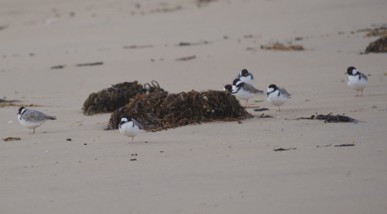
Image 1: Hooded plovers flocking at Powlett River.
In the water
Little penguins
Breeding success of little penguins on Phillip Island (Milawul) is measured through regular monitoring at seven study sites across the Summerland Peninsula, where breeding pairs and their chick-rearing success is recorded. Success is measured as the number of chicks raised to fledging per pair, with a long-term average of 1.02 chicks per pair.
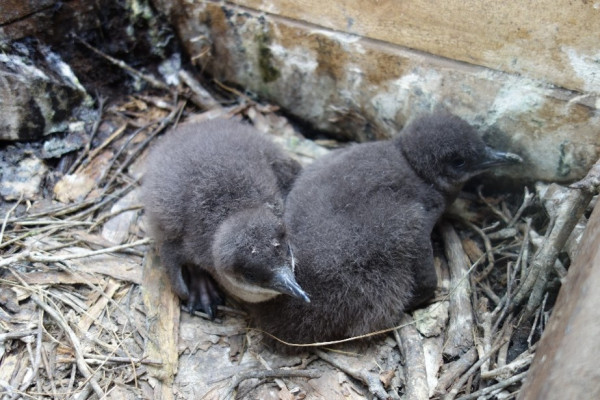
Image 2: Post guard penguin chicks
The 2025–26 breeding season saw first clutches laid in mid-September 2025. Across the monitoring sites a total of 169 breeding pairs were observed. Of these, 147 chicks were successfully raised to fledging, giving an overall breeding success of 0.87 chicks per pair. While this sits slightly below the long-term average, it reflects the natural variability that characterises little penguin breeding, which is sensitive to a range of environmental and oceanic conditions that shift from season to season.
Seal research at Seal Rocks
Phillip Island Nature Parks is calling on citizen scientists to help researchers identify and count seals from drone images captured during seal breeding season at Seal Rocks off Phillip Island (Milawul) and The Skerries near Mallacoota.
Anyone can take part in what is one of the largest long-term monitoring projects for Australian fur seals, providing vital information for marine scientists and helping ensure mega breeding colonies continue to thrive. SealSpotter participants collectively count an average 171,000 seals each year, with recorded population trends closely matching expert scientific counts.
This valuable information helps us monitor the health of our marine ecosystem, track long-term population trends, identify any seals entangled in plastic or fishing materials and inform marine and coastal management in Victoria.
Australian fur seals are top predators, meaning changes in their populations can reflect broader ecosystem conditions, including food availability and ocean health. Seal populations can provide important clues about the health of the ecosystem more broadly, including species like little penguins.
For more information, and to access SealSpotter please visit our Research page.
On the land
Seabird Habitat Resilience Project
As part of the ‘Seabird Habitat Resilience' project the weed mapping across Cape Woolamai is now complete, covering almost 200 hectares. This level of recording ensures that the field crew can control weeds by targeting precise locations, conduct follow-up evaluations on weed control effectiveness after treatment and identify new infestations that emerge in the landscape.
Woody weed control has begun, progressing systematically from Magiclands towards the Pinnacles with control efforts focused on marram grass, sea spurge and African boxthorn. The team is using a new biological control vector developed by the CSIRO on African boxthorn.
At Ventnor, weed mapping across five hectares in the short-tailed shearwater colony is complete and kikuyu control has been undertaken across the site. At Observation Point, marram grass has been slashed and controlled, followed by supplement planting of over 110 native hairy spinifex completed to restore the dune’s natural formation and values, including removal of semi-aquatic weed sea spurge.
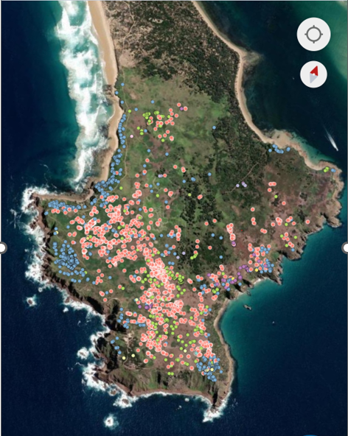
Image 3: Weed mapping at Cape Woolamai. Dots represent weed species and location.
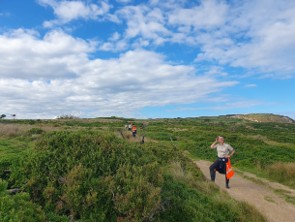
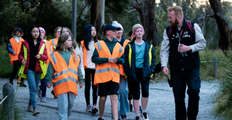
Image 4: Rangers lining up ready to undertake weed mapping at Cape Woolamai.
Reserves Management Program
Weed control has been undertaken across much of the reserve network, including kikuyu control on the Summerland Peninsula by in-house teams and contractors, tall wheat grass control at Fishers Wetland, and woody weed control at Conservation Hill, Oswin Roberts Reserve, Ventnor Koala Reserve and the Summerland Peninsula. Gorse control has also been carried out across the park, along with sea spurge control at Thornys and Hutchinson Beach.
Revegetation works include planting 100 moonah trees at Churchill Island’s North Point area, 500 plants at Radio Tracking Bay to support degraded and erosion-prone areas, and 670 plants along the creek at the Penguin Parade.
Redundant infrastructure has been removed across several reserves, including old coops at Five Ways Reserve, redundant fencing at Oswin Roberts Reserve, and an old foreshore fence at Smiths Beach, with assistance from our construction team.
Wildlife Rehabilitation Centre
We are very happy to report that, after regrowing enough hair and spines for protection, three of the short-beaked echidnas that underwent treatment for skin conditions have been released!
After the unusual number of cases we received with one individual being a suspected repeat patient, we are working through the process to be granted permission from the Department of Energy, Environment, and Climate Action to microchip any potential future echidnas that come into care with the same symptoms. This will allow us to ensure the treatment we are providing is effective long-term and that we are not repeatedly treating the same echidnas for the same issues.
While this method of identification is more invasive than others, the primary symptom of their condition (spine loss) eliminates other, less invasive options such as adhering a bead to one of their spines. The procedure of microchipping echidnas will be undertaken by a veterinarian while the animal is under anaesthesia to ensure appropriate placement and best practice animal welfare.
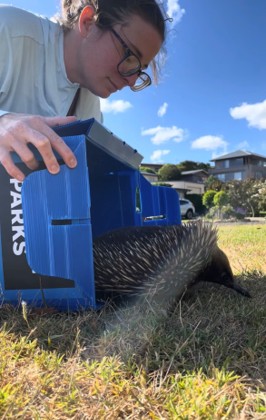
Image 5: Echidna released with new grown spines and hair.
Keeping wildlife wild - the greatest thing you can do for wildlife is to keep it wild. Please always maintain a safe distance and remember how lucky we are to be able to share our beautiful island home with a diverse range of native wildlife.
Donate to the Penguin Foundation to support the vital conservation work of Phillip Island Nature Parks
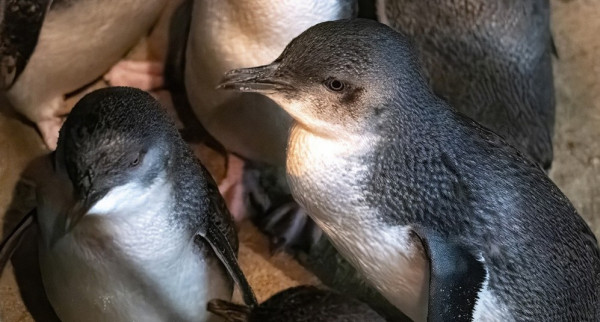
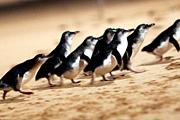
Image 6: Little penguins
For twenty years, the not-for-profit Penguin Foundation has played a vital role in protecting little penguins and the ecosystems they depend on. What began on Phillip Island, Milawul, where the world’s largest little penguin colony was once under threat, has grown into an organisation grounded in science, conservation action, and community support. That early success showed what is possible when research and community come together, reminding us that these fragile ecosystems are always changing and must be actively protected. The Foundation and its generous donors are partners who are proud to provide funding to Phillip Island Nature Parks to offer rescue, rehabilitation and habitat protection to little penguins and other native species.
'By staying alert to new threats and acting early, we can help ensure future generations will still know the wonder of little penguins.' -Professor André Chiaradia, Senior Scientist
Your gift will help fund:
- Research that monitors the health and viability of little penguin populations over time
- Early detection of disease and environmental threats
- Rescue and rehabilitation for sick, vulnerable and injured penguins
- Rapid response when animals are found in distress
- Conservation action that protects penguins and their habitats from climate change
Learn more here: penguinfoundation.org.au and watch our impact video to experience our work in action.
Your contribution protects little penguins and powers vital science.
For the locals and visitors
Smiths Beach Infrastructure Project
Following last year’s upgrade of the Woolamai Beach Surf Life Saving Club rescue base, the Nature Parks construction team is now rebuilding the adjoining stair and landing structure and upgrading the accessible ramp at Smiths Beach.
Planned work addresses excessive steel corrosion and deteriorating materials on the existing structures. Sustainable design and material choices are being implemented to improve beach access and safety, reduce ongoing maintenance and repairs, and maintenance upgrades to the accessible ramp will prolong safe function of this important community beach access.
The timing for this work aims to minimise impacts where possible. The May – August 2026 construction period was selected for work to occur outside of peak surf lifesaving season, while potential impacts to beach nesting shorebird breeding and short-tailed shearwater are also reduced. The works are supported by grant funding from the Department of Energy, Environment and Climate Action to improve public access and safety.
To ensure safety throughout construction, some closures of the eastern access are required. Public access to Smiths Beach will remain at all times via the western access stairs.
Support your Nature Parks
Keeping Wildlife Wild
The greatest thing you can do for wildlife is to keep it wild. Please always maintain a safe distance and remember how lucky we are to be able to share our beautiful island home.
We’d love to see your images from around the Nature Parks
Don't forget to share your autumn images of the Nature Parks with us.
Tag us:
Instagram - @PhillipIslandnp
Facebook - PhillipIslandNatureParks
#PhillipIslandNP