










Discover little penguins in their natural environment
 |
 |
 |
The Penguin Parade provides students with the opportunity to experience one of Australia’s most remarkable wildlife spectacles while exploring the coastal environment that little penguins call home.
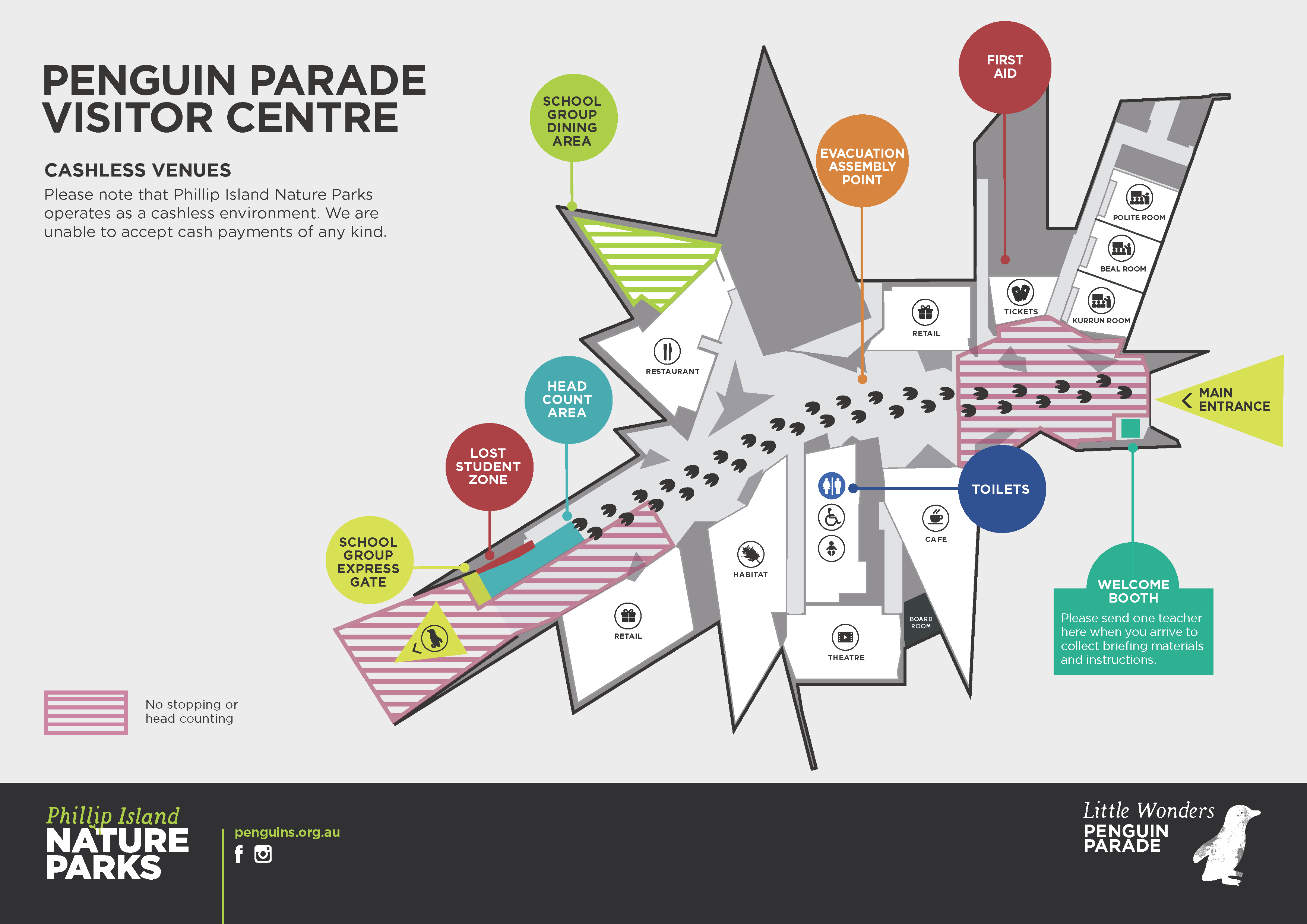
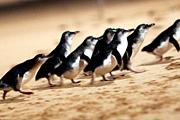
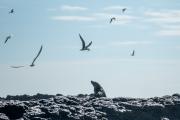
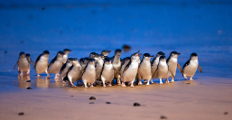
As you explore the site, students can observe the landscape, vegetation and coastal habitats that support the penguin colony. Depending on the time of your visit, you may see little penguins returning from the ocean, resting in their burrows or moving through the colony. Keep an eye out for other coastal wildlife too, including seabirds and wallabies.
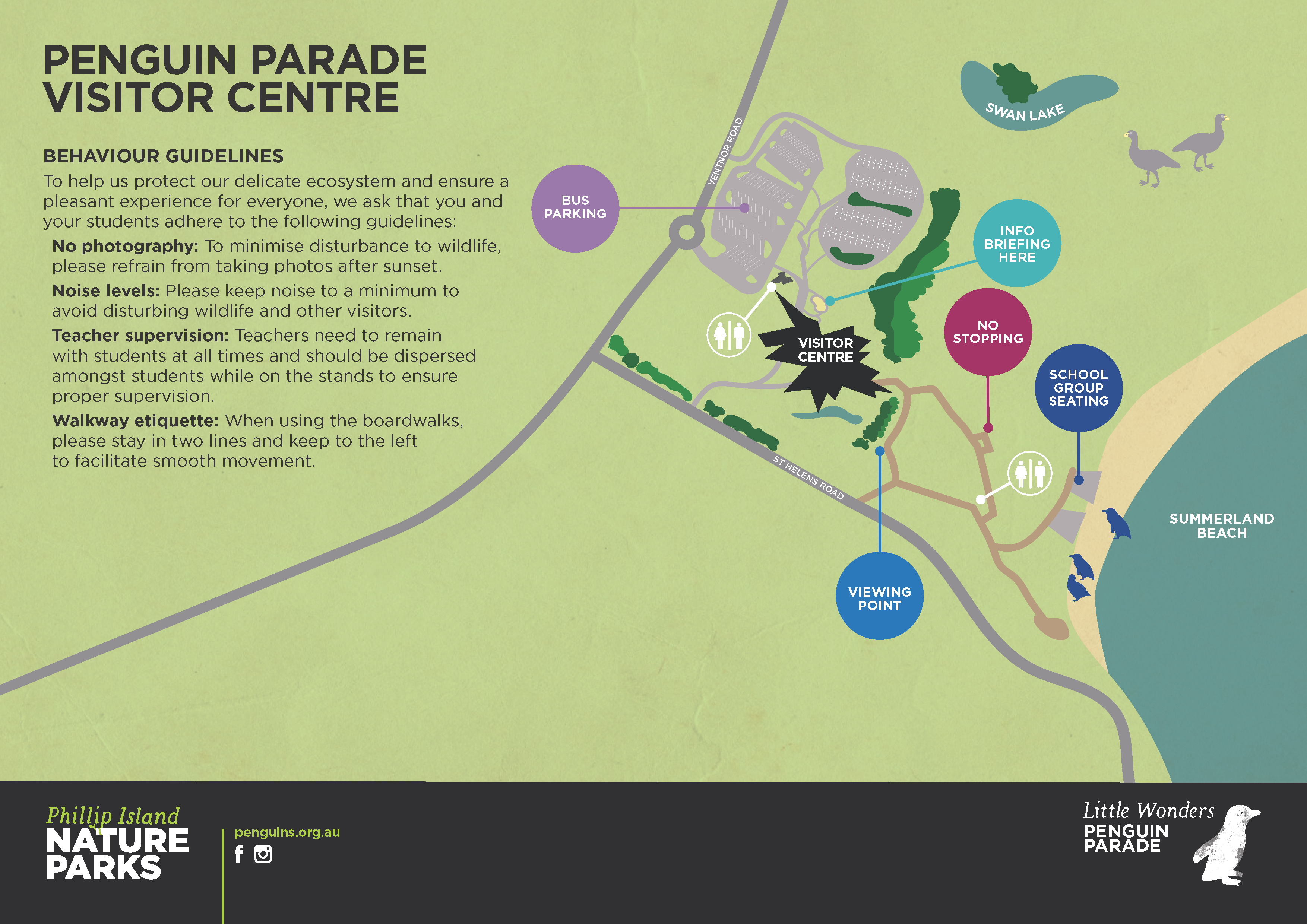
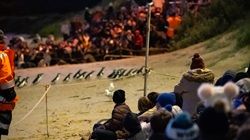
The boardwalks and viewing areas provide opportunities for students to observe wildlife while learning about the importance of protecting sensitive habitats. Look closely at the landscape and consider how the site is managed to balance wildlife conservation with the experience of thousands of visitors each year.
What can students explore?
Students can investigate:
- Little penguin adaptations and behaviour
- Coastal ecosystems and habitats
- The relationship between wildlife and their environment
- Threats to wildlife and conservation
- How visitor access is managed to protect wildlife
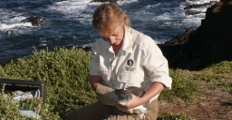
- The ways scientists and conservation teams monitor and protect penguin populations
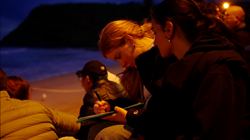
The Penguin Parade is an excellent place for students to practise observation and fieldwork skills. Encourage students to look, listen and record what they notice rather than simply moving from one viewing point to the next.
Allow time to explore at your own pace. The experience can be adapted for different age groups, from simple wildlife observation through to more detailed investigations of ecosystems, conservation and human impacts.
Dress for the conditions: Much of the experience is outdoors and conditions can change quickly. Warm, waterproof layers and comfortable walking shoes are recommended.