




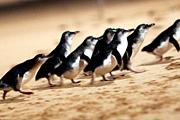







Little penguin vaccination program
We’re taking extra steps to help protect the Phillip Island and St Kilda’s little penguin colonies from H5 avian influenza, also known as bird flu.
During August and September 2026, trained staff will health check, microchip and vaccinate some penguins. Penguin welfare remains our highest priority.
This is an internationally significant conservation program and one of the largest penguin vaccination programs of its kind in the world. Phillip Island Nature Parks has decades of experience and research caring for and monitoring little penguins, which helps make this work possible.
About the program
The vaccination program builds on previous research by Phillip Island Nature Parks and research partners.
This demonstrated encouraging immune responses and no observed long-term adverse impacts in vaccinated little penguins.
Vaccination is not a standalone solution – it is an important tool alongside surveillance, monitoring and biosecurity measures that may help reduce the impacts of H5 avian influenza on vulnerable wildlife populations.
Phillip Island Nature Parks has approval to vaccinate up to 5,000 little penguins at the Penguin Parade and up to 800 at St Kilda.
The exact number of penguins to receive both doses of the vaccination will depend on weather, penguin movements and operational requirements.
Little penguins will receive an initial vaccination then a booster, approximately 21 to 28 days later.
The program is made possible thanks to the Australian Government Department of Agriculture, Fisheries and Forestry, the Victorian State Government and Agriculture Victoria, the University of Melbourne, and the Penguin Foundation. The St Kilda program is also supported by Earthcare St Kilda and Parks Victoria.
What visitors may see
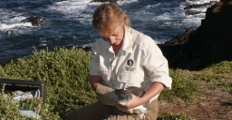
At the Phillip Island Penguin Parade, as penguins emerge from the ocean, visitors may see trained staff guide penguins into a holding area. Staff will then check, weigh, microchip and vaccinate each penguin before releasing it so it can continue onto its burrow.
At St Kilda vaccinations will occur along the breakwater around penguin nesting areas. This will generally be beyond the viewing boardwalk so not easily visible to visitors.
Visitors may hear some loud squawking. This is normal and expected behaviour for little penguins.
Why is it happening?
H5 avian influenza has been detected at Phillip Island. While vaccination is only one part of the response, it is an important tool to help protect the little penguin colony. The program also supports broader wildlife disease preparedness and monitoring.
Penguin welfare
Penguin welfare is our highest priority. All vaccination, microchipping and monitoring activities are undertaken by trained staff using approved animal welfare protocols. A vet oversees the process.
Human health and visitor safety
The Penguin Parade and St Kilda Penguin Viewing Experience remain open and the risk to visitors remains low. Visitors should continue to follow the usual wildlife viewing guidelines and any directions from staff.
Frequently Asked Questions
Yes. The Penguin Parade and St Kilda Penguin Viewing Experience remain open and operating as normal while the vaccination program is underway.
Not necessarily. Vaccination activities will occur on selected penguins and may not be visible from all viewing areas or during every visit.
There is some temporary stress for any wild animal being handled.
However the little penguins at the Penguin Parade and at St Kilda are used to being monitored. Previous vaccination research with little penguins showed no adverse reactions to the vaccine.
All activities are undertaken by trained staff using approved animal welfare protocols.
Microchips allow researchers to identify individual penguins and monitor their health, survival and response to vaccination over time.
The risk to visitors is low. The Nature Parks attractions remain open and there is currently no evidence that viewing wildlife from designated visitor areas poses a risk to the public.
No photos or videos are permitted after sunset at the Penguin Parade. This is a long-standing requirement and applies whether or not the vaccination program is taking place. We ask that visitors follow all directions provided by the Nature Parks staff during their visit.
Photography, without flash, is allowed at St Kilda. Any professional or media requests must be pre-arranged. Information on how to do this is available here.
Professional-quality Penguin Parade images are available for download here.
The vaccination program is expected to run during August and September 2026, with timing influenced by weather, penguin movements and operational requirements.
You can explain that some penguins are receiving a vaccine, just like people sometimes do, to help protect them from bird flu. The penguins are being cared for by trained experts and will return to their burrows afterwards.
The latest vaccination information is available on the Phillip Island Nature Parks website and avian flu updates can be found on the Agriculture Victoria website.
By visiting Phillip Island Nature Parks, you are helping support the conservation and care of the little penguins and their habitat. If you would like to do more, you can support this work by making a donation to the Penguin Foundation.
Every contribution helps protect little penguins now and into the future.